
Screw Land 3D
PixOn GamesPuzzle
4.8884.00 Reviews
- Version
- 2.23.6
- Installs
- 1.00M
- Age Rating
- Everyone
Screenshots
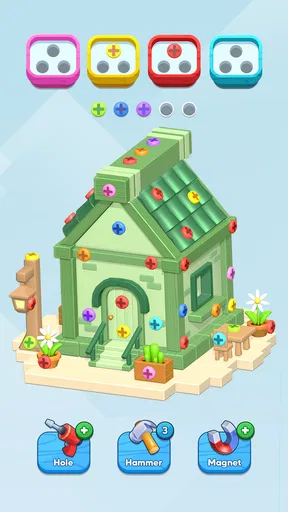
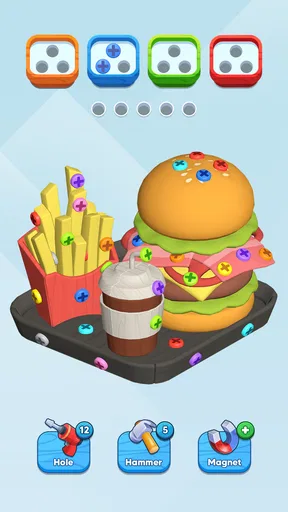
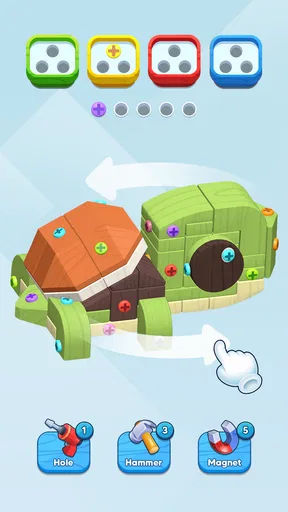
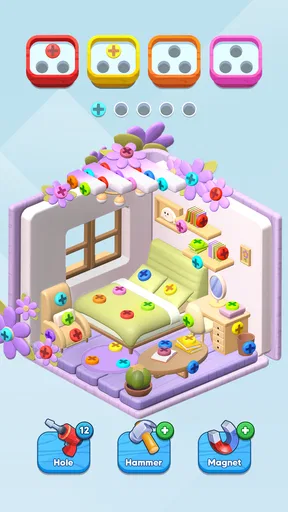
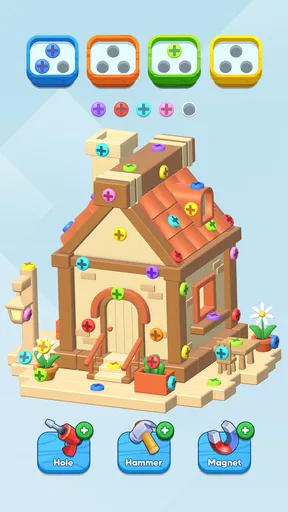
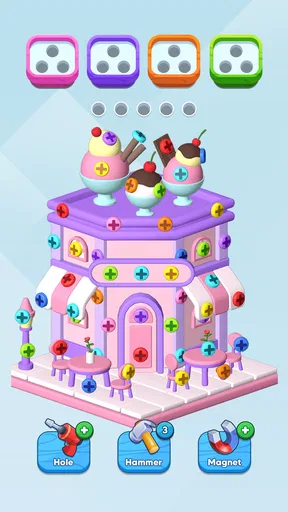
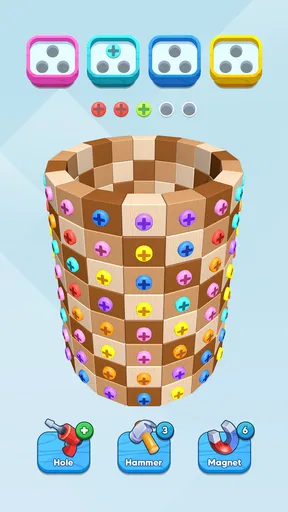
Our Review of Screw Land 3D
 Analysis by Appyee
I went into Screw Land 3D expecting a light puzzle game built around moving hardware, and that is exactly where its appeal lies. The idea is easy to understand: inspect a three-dimensional arrangement, sort out the screws, twist pieces in the right order, and gradually clear the structure. The challenge is not fast reflexes. It is reading the board, predicting what will become accessible, and avoiding a move that leaves the remaining pieces awkwardly blocked.
That makes this a good fit for short, focused sessions. I can start a level without learning a complicated rule set, make progress almost immediately, and stop after a puzzle without feeling that I have abandoned a long story or competitive match. At the same time, the simple controls do not mean every board is simple. The interesting decisions appear when one screw affects several possible moves and the obvious-looking action is not necessarily the safe one.
PixOn Games presents the title as a free puzzle game for everyone, and my experience matches that broad positioning. It is approachable enough for someone who rarely plays games, while still giving regular puzzle players a reason to examine each arrangement carefully. Its current version is 2.23.6, and it runs on Android devices using version 6.0 or later. The game has also built a sizable audience, with over a million installs and a 4.8 average from around twenty-nine thousand ratings.
How the screw puzzle loop feels in practice
I focus here on the practical rhythm of inspecting a crowded structure, choosing a screw, and using the result to rethink the board. One helpful way to keep that rhythm deliberate is to pause after any move that opens a new area, rather than treating the newly available pieces as an automatic to-do list. That shift from acting to reassessing leads naturally to the question of how the puzzle’s feedback shapes each decision.
The first action is simple, but the board makes you think
The first thing I do in a level is not tap randomly. I look for the pieces that are already exposed and identify which screws seem to control access to the rest of the structure. That small pause matters. A screw may be easy to reach but still be the wrong choice if removing it leaves another part suspended in an inconvenient position. The game rewards observation before movement, which gives the opening action more purpose than a basic matching puzzle.
Once I choose a screw, the interaction is direct: I tap, twist, or select the relevant piece and watch the arrangement change. The feedback is immediate enough that I can understand whether the move helped. A successful action opens space, separates a component, or creates a clearer route through the puzzle. A poor action does not require a complicated explanation; the board itself shows me that I have made the next step harder.
This is where the three-dimensional presentation earns its place. I am not only matching colors on a flat grid. I need to consider which parts overlap, which screw is holding another piece in position, and how the visible side relates to the structure behind it. Rotating my attention around the arrangement is part of solving, even when the actual control scheme remains uncomplicated.
One useful habit is to distinguish between a screw that is available and a screw that is useful. Available pieces can be tapped immediately, but useful pieces improve the whole board. I usually begin with the move that reveals the most information rather than the move that merely produces the quickest animation. That approach reduces backtracking and helps me understand the puzzle’s intended order without turning the game into trial and error.
The feedback rhythm keeps each move understandable
The best part of the action loop is the rhythm between decision and response. I choose a move, see the structure react, reassess the open spaces, and then decide again. There is no need to memorize a long sequence before starting. The board gives enough visual feedback to let me adjust my plan after every meaningful action.
That rhythm is especially helpful when a level seems crowded at first. The initial arrangement can look like a mass of screws and parts, but each correct removal reduces the visual noise. The puzzle becomes easier to read as it progresses, which creates a satisfying sense of control. I am not simply watching a progress bar increase; I am physically understanding the arrangement better with every successful step.
There is also a useful tension between speed and caution. Moving quickly feels good when the solution is obvious, but rushing can cause a chain of inconvenient choices. Taking an extra moment to check the next two or three possible moves is often more valuable than tapping through the first available option. I would not call the game slow, but it favors deliberate play over reflexive tapping.
For an everyday example, I can see this working well during a short break when I want something more engaging than scrolling but less demanding than a full strategy game. I might complete one puzzle while waiting for an appointment, put the phone away, and return later without needing to remember a plot or a team setup. The self-contained structure makes that kind of stop-and-start use comfortable.
The limitation is that the same visual focus can become tiring during a long uninterrupted session. Looking closely at layered pieces and repeatedly checking possible screw orders requires concentration. Players who want a constantly changing pace may find the loop more measured than exciting. This is a puzzle game first, so its satisfaction comes from clarity and progress rather than spectacle or speed.
Why the reward works without changing the core game
When I solve a board, the reward is not only that the puzzle disappears. The stronger reward is the feeling that a confusing mechanical arrangement has become understandable. The game turns a cluttered setup into a clean result through a series of choices that I control. That transformation is the main reason I want to begin another level.
The reward loop also benefits from the scale of each challenge. A puzzle can feel complete on its own, so I do not need to commit to a long campaign before receiving a satisfying conclusion. This matters for casual players, but it also helps experienced puzzle fans who enjoy solving one carefully designed situation at a time. The game’s free price makes it easy to try that loop without an upfront purchase, although in-app purchases range from $1.99 to $99.99 per item, so I would still pay attention to spending if the game is being used by a child.
I like that the reward encourages a fresh look at the next board rather than asking me to repeat the exact same action mindlessly. The surface idea remains screws and parts, but the challenge comes from how the pieces are arranged and which order makes sense. That distinction is important: a satisfying puzzle should make me feel that I solved a specific problem, not merely performed a familiar gesture again.
There is a trade-off here. If you prefer rewards based on character development, equipment, or a large collection system, this game may feel modest. Its payoff is primarily the solved arrangement and the momentum of completing another puzzle. That is a strength for players who dislike clutter, but a weakness for anyone who needs a substantial progression layer to stay interested.
Resetting after a mistake is part of the learning
A failed attempt does not feel like wasted time because the board teaches me what went wrong. Perhaps I removed a screw that should have stayed in place, opened the wrong section first, or created a blockage by focusing only on what was visible. The useful response is not to repeat the same sequence faster. It is to reset mentally and identify the first decision that caused the later problem.
This reset is one of the reasons the game suits puzzle players who enjoy refining a plan. I can treat an unsuccessful run as information about the structure. The next attempt begins with a better understanding of the dependencies between pieces, so the restart has a clear purpose. That is more satisfying than a puzzle that punishes a mistake without showing how to improve.
My practical advice is to avoid committing to a long chain of moves just because the first few worked. After each major piece is removed, I reassess the board from the newly opened angle. This prevents a common mistake: assuming that the solution order remains obvious after the structure changes. In a three-dimensional puzzle, a successful early move can reveal a completely different set of priorities.
Another useful approach is to separate progress from confirmation. If a move opens a new area, I do not immediately continue tapping through every available screw. I first inspect what the opening has revealed. That short reset within the level often saves more time than it costs, especially on dense arrangements where one careless removal affects several later options.
The downside is that players who dislike restarting or reconsidering choices may find this loop frustrating. The game asks for patience, and the most enjoyable sessions are the ones where I accept that a reset is part of solving rather than treating it as a failure. If you want a puzzle that can be played almost automatically while your attention is elsewhere, this is probably not the right choice.
Who will enjoy it, and who should choose something else?
I would recommend this game to people who like tactile-looking puzzles, spatial reasoning, and short sessions with a clear finish. It is particularly suitable for players who enjoy noticing relationships between objects: which part is holding another, which opening matters most, and how one removal changes the available options. The Everyone age rating also makes its basic concept approachable for a broad audience, though adults should remain aware of the available purchase range when sharing a device.
It is less suitable for someone looking for a narrative adventure, a competitive leaderboard experience, or a high-speed arcade challenge. The game’s pleasure comes from solving mechanical layouts, not from developing a character or mastering rapid combinations. Players who prefer traditional flat match-three boards may also find the spatial viewpoint more demanding, while those who enjoy physical-object puzzles will likely appreciate the extra layer of depth.
Compared with ordinary matching games, the main difference is that the answer is not always visible as a color pattern. Matching games often let me scan for identical items and act quickly. Here, I need to think about order, access, and the consequences of removing a component. Compared with classic logic puzzles, the presentation is more tactile and immediate, but the challenge may feel less abstract because the board is built around a recognizable object: screws and connected parts.
That comparison helps explain the game’s position in the puzzle category. It is not trying to replace a deep logic title or a fast casual match game. Instead, it sits between them, offering the accessibility of a simple tap-based experience with enough spatial planning to make careless play unreliable. Whether that balance works depends on how much thought you want from a short mobile session.
Small habits that make solving more consistent
I found three habits especially useful. First, I scan for bottlenecks rather than counting every visible screw. A bottleneck is a piece whose removal appears likely to expose several other choices. Prioritizing it gives the board more information and reduces the chance of spending early moves on pieces that do not improve access.
Second, I check the consequences of a move before confirming it whenever the arrangement looks crowded. The important question is not simply “Can I remove this?” but “Where will the remaining parts go afterward?” Thinking one step beyond the animation makes the puzzle feel more controlled and prevents avoidable resets.
Third, I use the end of a level as feedback for the next one. If I solved a board by repeatedly choosing the most open screw, I ask whether that worked because of the structure or because I happened to get lucky. Carrying a general principle forward is useful, but assuming every arrangement follows the same order is not. The game is more enjoyable when I adapt rather than search for one universal formula.
These habits are not complicated, but they change the experience from tapping at whatever stands out to actively managing the puzzle’s information. They also make the game easier to recommend to another person. I can explain a way of thinking about the board, not just tell them to keep trying until something works.
Device expectations and the free-to-play decision
The Android requirement is relatively broad, since the game supports devices running Android 6.0 or later. That makes it accessible to people who are not using a recent phone, although the comfort of a three-dimensional puzzle still depends on screen size, touch accuracy, and how clearly the arrangement can be viewed. On a smaller display, I would expect myself to spend more time checking the structure before acting.
The game is free to download and play, which is a sensible model for trying the core loop. I can decide whether the screw-based puzzles hold my attention before spending anything. The presence of optional purchases means I would recommend setting a spending boundary in advance, especially on a shared family device. The listed individual purchase range runs from $1.99 to $99.99, a wide spread that makes personal budgeting more important than the free entry point alone might suggest.
Its audience numbers and strong average rating suggest that the basic concept has connected with many players, but popularity does not remove the need to judge the fit for yourself. A high rating cannot tell me whether I enjoy spatial obstruction puzzles, and a million-plus install count cannot make a slower, thoughtful loop appealing to someone who wants constant action. I would use those figures as signs of broad interest, not as a substitute for understanding the gameplay style.
My verdict on the complete action-to-reset loop
The loop is easy to describe but more satisfying to perform than the short store summary suggests. I inspect a structure, choose a screw, watch the board open or tighten, use that feedback to revise my plan, and eventually clear the arrangement. The reward is a solved object and the confidence that my sequence of decisions mattered. When I make a poor choice, the reset gives me a reason to try again with better information.
That cycle is the game’s real strength. It creates a natural reason for another session without needing a dramatic story or an elaborate collection system. I finish one puzzle and feel curious about the next arrangement because the next problem may require a different order of thinking. The reset is not merely a restart button; it is the point where observation becomes strategy.
There are clear limits. Long sessions can feel repetitive if the central screw-and-part interaction is not already appealing, and the thoughtful pace will not satisfy players seeking action or competition. The purchase range also deserves attention, particularly for families. Still, those concerns do not undermine the core design; they define the audience it serves best.
For me, this is a strong casual puzzle recommendation when I want a focused break with a visible beginning, middle, and end. PixOn Games has built the experience around a tactile problem-solving idea that is immediately approachable but rewards restraint. If you enjoy making one careful move, learning from the board, and starting again because the next arrangement looks solvable, this is worth trying. If you need story, speed, or deep long-term progression, I would choose a different type of puzzle game instead.
As a free game rated for Everyone, Screw Land 3D offers a low-risk way to test that style for yourself. I would begin with short sessions, pay attention to how much I enjoy planning rather than tapping, and decide from there whether the recurring action-feedback-reward-reset cycle has enough variety to keep me coming back.
Verdict
Strengths of Screw Land 3D
- Simple controls make it easy to start playing immediately.,3D visuals make screw and bolt interactions clear.
- Short levels are suitable for quick gaming sessions.
- Puzzle difficulty gradually increases as you progress.
- Offline play is useful when you have no internet access.
Limitations of Screw Land 3D
- Some levels may feel repetitive after extended play.
- Hints or extra moves may be limited without rewards or purchases.
- The difficulty can occasionally change abruptly between levels.
- Ads may interrupt gameplay, especially after completing puzzles.
- Players seeking complex mechanics may find the puzzles too simple.
Other Releases by PixOn Games
View All
Knit Away
Puzzle4.8
Similar Picks in This Category
View All
Block Blast!
HungryStudio4.8

Braindom: Brain Games Test
Lahana Game Studio4.6

AMAZE!
CrazyLabs LTD4.6

Sudoku - Classic Sudoku Puzzle
Oakever Games4.7

Art Puzzle - Puzzle Games
Easybrain4.8

Amaze GO!
Oakever Games4.9
Frequently Asked Questions
What is Screw Land 3D and how is the game played?
Screw Land 3D is a casual puzzle game centered on removing screws, bolts, and mechanical pieces in the correct order. Each level presents a three-dimensional structure that must be dismantled carefully. You need to observe blocked paths, move pieces strategically, and avoid making choices that leave the remaining parts impossible to remove. The controls are generally simple, making it accessible for short gaming sessions.
Is Screw Land 3D free to download and play?
Screw Land 3D can generally be downloaded for free, allowing players to try its core puzzles without an initial purchase. However, the game may include advertising, optional in-app purchases, or both. Ads can appear between levels or when using certain helpful features, while purchases may provide extra tools or remove advertisements. Before downloading, check the store listing for the current pricing and payment details.
Does Screw Land 3D require an internet connection?
The basic puzzle experience in Screw Land 3D may work without a continuous internet connection, which is convenient when traveling or playing offline. Nevertheless, some functions can depend on connectivity, including advertisements, reward videos, cloud-related features, updates, and purchases. Offline availability can also vary between versions and devices, so it is best to test the game after installation rather than assuming every feature will work without internet access.
Is Screw Land 3D suitable for children and casual players?
Screw Land 3D is designed to be easy to understand, with straightforward touch controls and puzzle mechanics that do not require advanced gaming experience. It may be suitable for casual players and older children, although parents should review the age rating, advertising content, and available in-app purchases before allowing younger users to play. Some later levels can require patience, planning, and careful visual attention.
Are there many levels, and does the difficulty increase over time?
The game is structured around multiple dismantling puzzles, and the challenge typically becomes more demanding as new layouts and obstacles are introduced. Early stages help you understand the basic screw-removal mechanics, while later levels require more planning because pieces can block one another or leave fewer available moves. The exact number of levels and available modes may change through updates, so the current app-store description is the best source for the latest content.
Play our best games!


